A fire pump system for high rise buildings is the backbone of any fire protection strategy in tall structures. Whether it is a commercial tower, hotel, residential complex or industrial facility, the fire pump system ensures that sufficient water pressure and flow reach every floor during an emergency.
Choosing the right fire pump system for a high rise building requires understanding the system components, selection parameters, applicable standards, and installation best practices. This guide covers everything engineers, procurement teams and project managers need to know.

1. Key Components of a High Rise Building Fire Pump System
A complete fire pump system for high rise buildings typically consists of five main components:
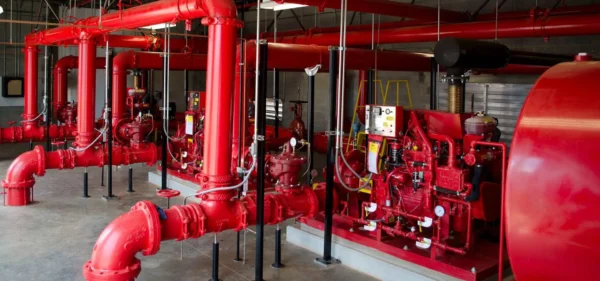
Electric Main Fire Pump
The electric main fire pump is the primary water supply unit activated during a fire event. Common types include:
- Horizontal monoblock centrifugal pump — suitable for buildings up to 150 metres
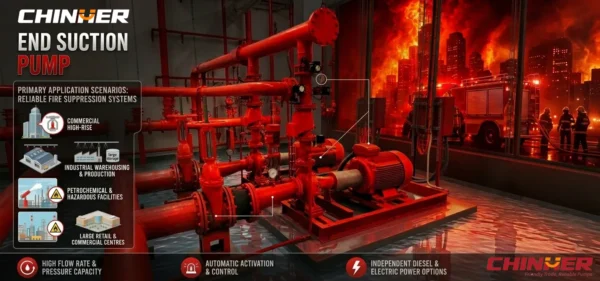
- Horizontal end suction centrifugal pump — suitable for buildings up to 140 metres
- Horizontal split case pump — high flow capacity, ideal for super high rise buildings
- Vertical turbine pump — used when the water source is a deep underground tank
Diesel Engine Fire Pump
Per NFPA 20, GB 50974, and most international fire codes, high rise buildings must install a diesel-driven backup fire pump. When mains power fails, the diesel pump starts automatically to maintain uninterrupted water supply. Key requirements:
- Auto-start within 10 seconds of power failure
- Independent fuel supply for a minimum of 8 hours continuous operation
Jockey Pump (Pressure Maintenance Pump)
 cdl-multistage-pump
 cdlf-multistage-pump
The jockey pump keeps the system pressurised during standby, preventing the main pump from starting unnecessarily due to minor pressure drops or small leaks.
Fire Pump Controller
A controller compliant with automates the start/stop logic, monitors pump status, and connects to the building’s fire alarm system.
Water Supply Source
- Dedicated fire water tank (most common in high rise buildings)
- Municipal water mains
- Natural water body (river or lake, for industrial sites)
2. How to Select the Right Fire Pump for a High Rise Building
Step 1 — Calculate Design Flow Rate (Q)
Flow rate is determined by building type and local fire code. Typical values:
- Class I high rise public buildings: indoor hydrant flow ≥ 40 L/s
- Super high rise (>100 m): add temporary refuge floor supply
Step 2 — Calculate Design Head (H)
Total Head = Static head + Friction losses + Residual pressure at the highest outlet
Example for a 100-metre building:
| Component | Value |
|---|
| Static pressure (100m) | ~1.0 MPa |
| Pipe friction losses | ~0.1–0.2 MPa |
| Minimum residual pressure (NFPA 20) | ≥ 0.35 MPa |
| Total design head | ~145–155 m |
Step 3 — Design the Pressure Zoning
For buildings over 100 metres, vertical pressure zoning is essential:
- Low zone (0–50 m): supplied by low-zone pump set
- High zone (50 m and above): supplied by high-zone pump set or booster arrangement
Maximum working pressure per zone should not exceed 1.2 MPa.
Step 4 — Configure the Pump Set
| Unit | Quantity | Purpose |
|---|
| Electric main pump | 2 (duty + standby) | Primary fire water supply |
| Diesel pump | 1 | Power failure backup |
| Jockey pump | 2 (duty + standby) | Pressure maintenance |
3. International Standards for High Rise Fire Pump Systems
| Standard | Region | Key Requirements |
|---|
| NFPA 20 | USA, Southeast Asia, Middle East | Performance curve, controller, acceptance testing |
| GB 50974 | China | National high rise fire water supply code |
| EN 12845 | Europe | Automatic sprinkler system pump requirements |
| AS 2941 | Australia | Fire pump installation standard |
4. Installation Best Practices
- Pump room location — Place the pump room adjacent to the fire water tank to minimise suction pipe length and reduce cavitation risk.
- Vibration isolation — Mount all pump units on concrete inertia bases with anti-vibration pads.
- Pipe velocities — Keep suction pipe velocity ≤ 1.5 m/s and discharge pipe velocity ≤ 2.5 m/s.
- Valve configuration — Install gate valves and check valves on every pump suction and discharge line.
- Routine testing — Conduct a no-flow churn test monthly and a full-flow performance test annually per NFPA 25.
5. Recommended Chinher Pump Products for High Rise Buildings
Frequently Asked Questions
Q: Does NFPA 20 require a diesel backup pump in every high rise building? A: NFPA 20 requires a backup power source for the fire pump. A diesel engine driven pump is the most common and accepted solution, particularly in regions with unreliable grid power.
Q: What is the difference between a jockey pump and a main fire pump? A: The jockey pump is a small pressure-maintenance pump that keeps the system charged during standby. It is not designed to supply firefighting flow — that is the role of the main fire pump.
Q: Can Chinher Pump supply fire pump systems with NFPA 20 compliance documents? A: Yes. We provide NFPA 20 conformity documentation, test reports, and full English operation and maintenance manuals for all EDJ series fire pump systems.
Get a Quote for Your High Rise Fire Pump System
Chinher Pump has over 10 years of experience manufacturing fire pump systems for high rise buildings across Southeast Asia, the Middle East, and beyond. We offer end-to-end support from technical selection through to after-sales service.
Contact us for a project quotation:
📧 info@chinherpump.com
📱 WhatsApp: +86 15372152011
🌐 www.chinherpump.com
Related articles:
Tags: fire pump system high rise buildings, NFPA 20 fire pump, diesel fire pump, split case fire pump, EDJ fire pump system, Chinher Pump